
Unvoice Bot
Transcribes voice notes into text directly within WhatsApp using AI.
Are you the owner?
Claim this tool to publish updates, news and respond to users.
Sign in to claim ownership
Sign InDescription
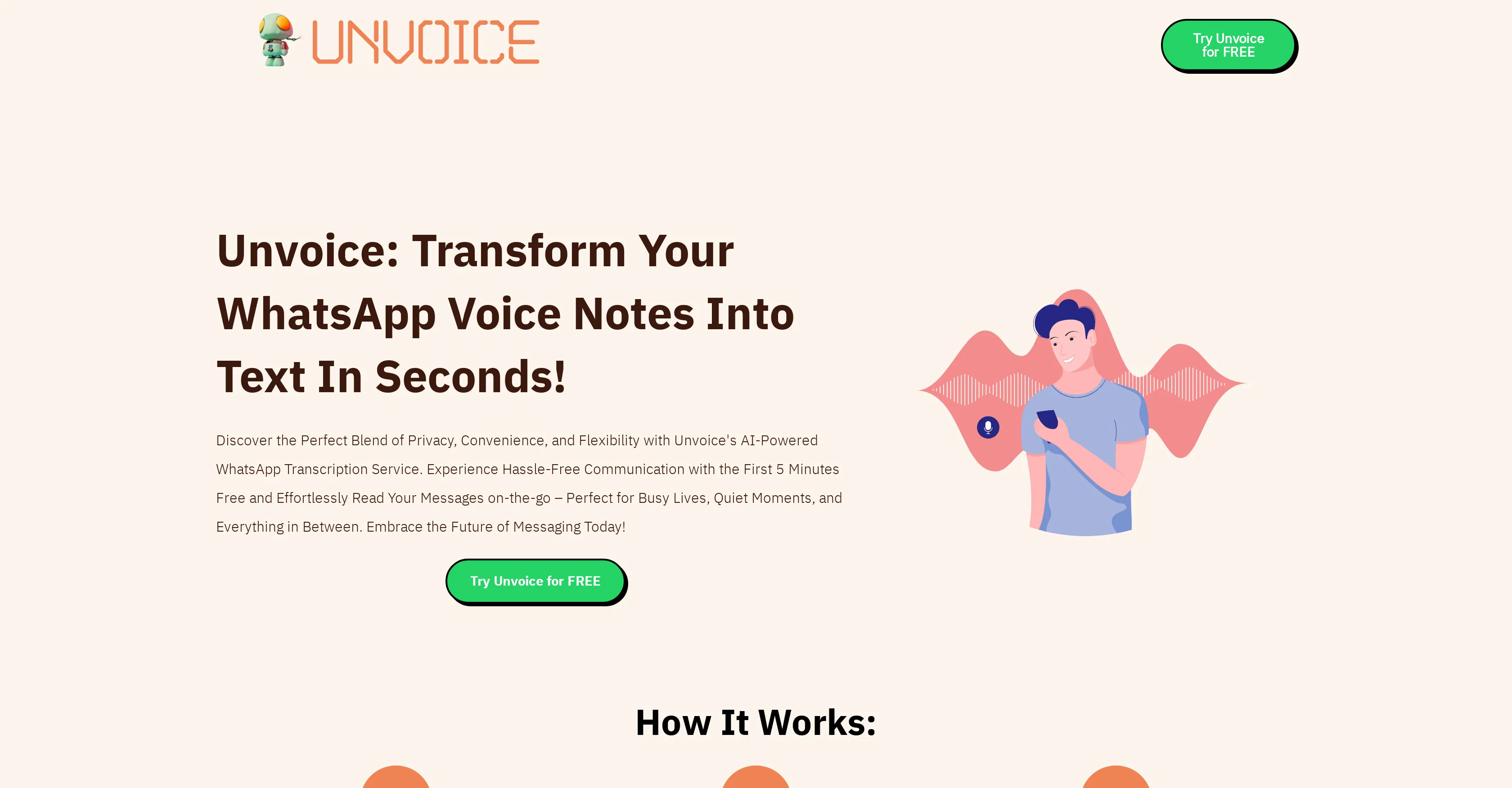
Unvoice Bot is an AI-powered transcription service created specifically for the WhatsApp messaging platform. It is designed to convert voice notes into accurate, readable text, addressing the common inconvenience of listening to audio messages in situations where reading is more practical or discreet. The primary value of this tool lies in its seamless integration into a widely used communication app, saving users time and enhancing accessibility by making audio content quickly scannable and searchable.
Key features: The bot can process voice notes of various lengths, delivering transcriptions directly into the WhatsApp chat. It supports multiple languages for transcription, allowing for cross-lingual communication. Users can simply forward a voice message to the bot's chat number to initiate the process. The service maintains the context of the conversation by returning the text to the same chat window. It also handles different audio qualities commonly found in voice messages. Furthermore, it provides a straightforward, no-frills user experience without requiring app switching.
What makes Unvoice Bot unique is its singular focus on WhatsApp, a platform where voice messaging is extremely prevalent but lacks native transcription. Technically, it leverages advanced speech recognition AI models optimized for conversational speech and the varied audio compression used in messaging apps. It operates as a standalone bot account within WhatsApp, requiring no separate app installation or complex setup. The integration is direct and chat-based, making it incredibly accessible to any WhatsApp user. There are no integrations with other platforms, as its design philosophy is to solve a specific problem within a single, high-usage environment.
Ideal for professionals, students, and anyone who receives frequent voice messages but often finds themselves in environments where listening is inconvenient, such as meetings, libraries, or public transport. It is particularly useful for quickly extracting key information, instructions, or contact details from a long audio message. Journalists or researchers can use it to get a textual record of interviews conducted via WhatsApp. It also serves as an accessibility tool for individuals who are deaf or hard of hearing, allowing them to participate in voice-note-based conversations. Teams using WhatsApp for work communication can leverage it to create searchable archives of verbal updates and decisions.